Dark mode and Light mode

Jsonedit.com supports dark mode and light mode.

How to change mode

  • Click on the Light Switch
  • It will change the mode from dark to light or light to dark
  • It will remember user selection

Searching JSON Documents

JMESPath

This site uses JMESPath to search JSON documents. JMESPath uses expressions to query json documents. More can be found here in the official website JMESPath

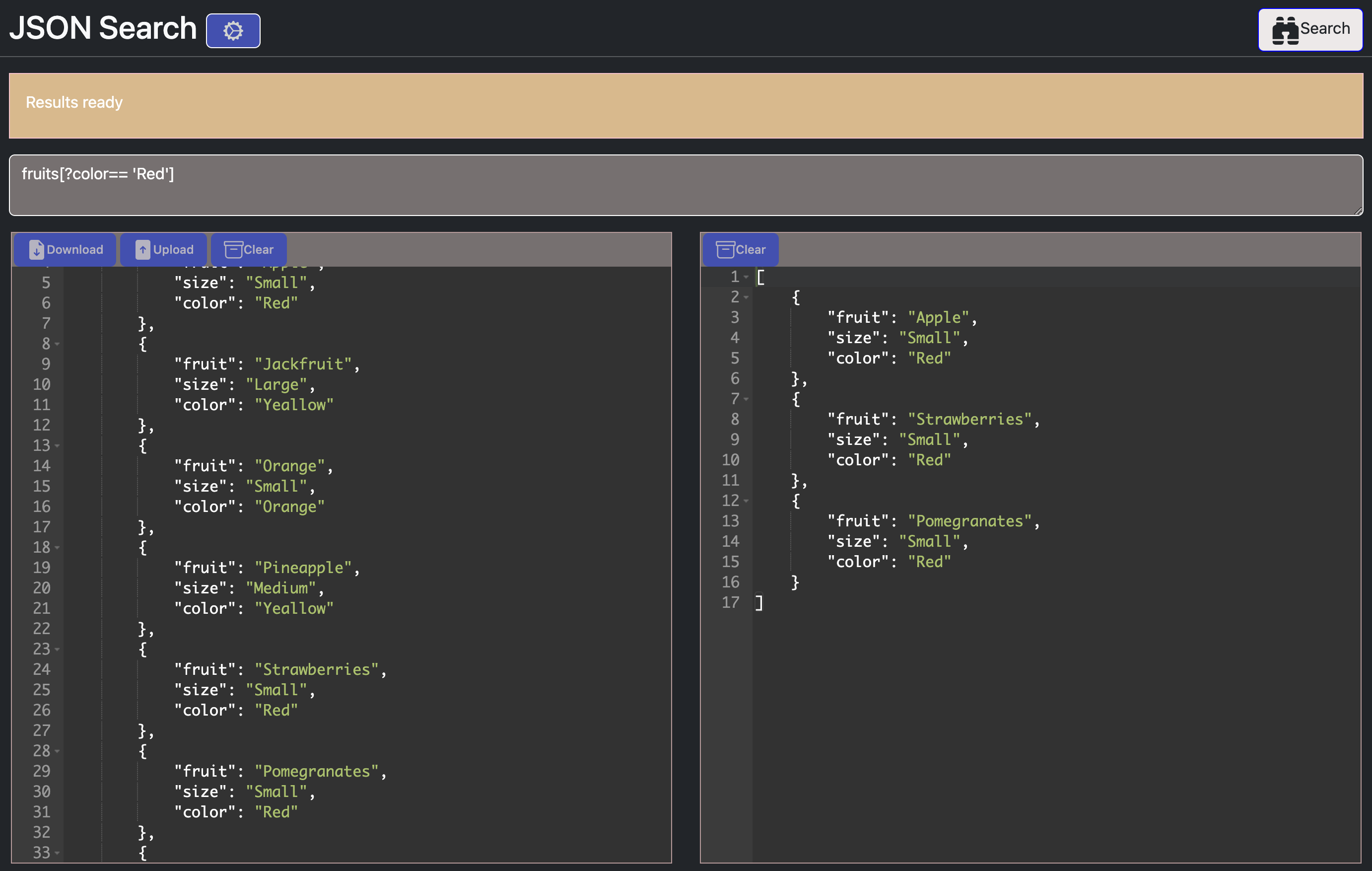
How to Search

  • Paste or upload the JSON document in left editor
  • Type the JMESPath query in the query editor
  • Click on the Search Button
  • Matching Result will show up in the right window

JSON Path Query

JSONPath is a query language for JSON, inspired by XPath for XML. It provides a standardized way to traverse, filter, and extract data from JSON documents.

For a deep dive into syntax and expressions, visit the official reference: JSONPath - Stefan Goessner.

How to use JSON Path

  • Navigate to the JSON Path tool.
  • Paste your JSON document into the input editor.
  • Enter your JSONPath expression (e.g., $.store.book[*].author) in the query bar.
  • The tool will evaluate the path and display matching results in the output window.

Comparing JSON

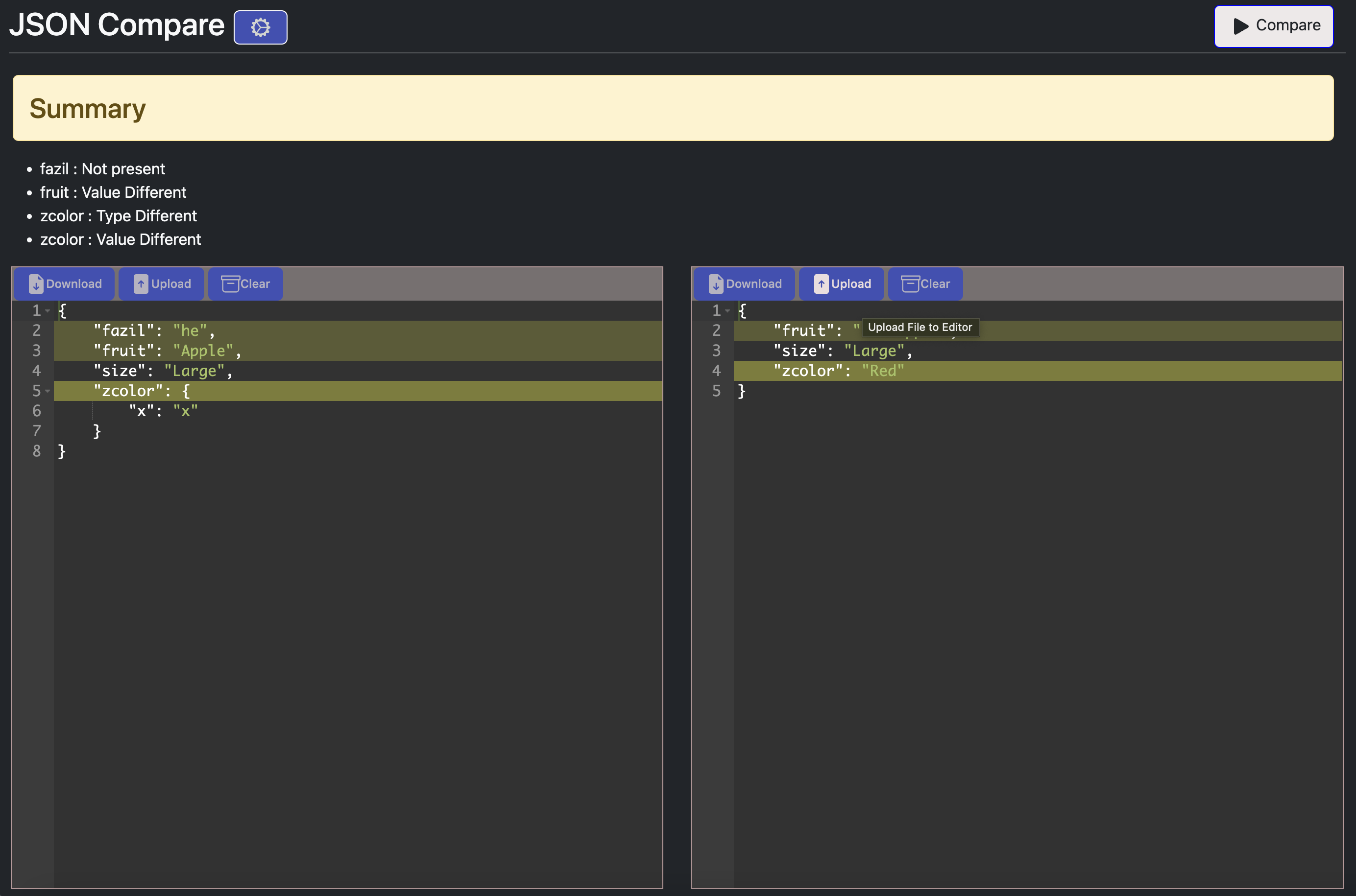
We can compare two JSON side by side. This tool will generate a summary of all the differences found and also will heighlight the lines in the editor.

How to Compare

  • Paste or upload the JSON document in left editor
  • Paste or upload the JSON document in right editor
  • Click on the Compare Button
  • A summary will be visible with differences
  • Lines that are different will be highlighted in editors

Following image shows one sample differences generated.

JSON Tree View

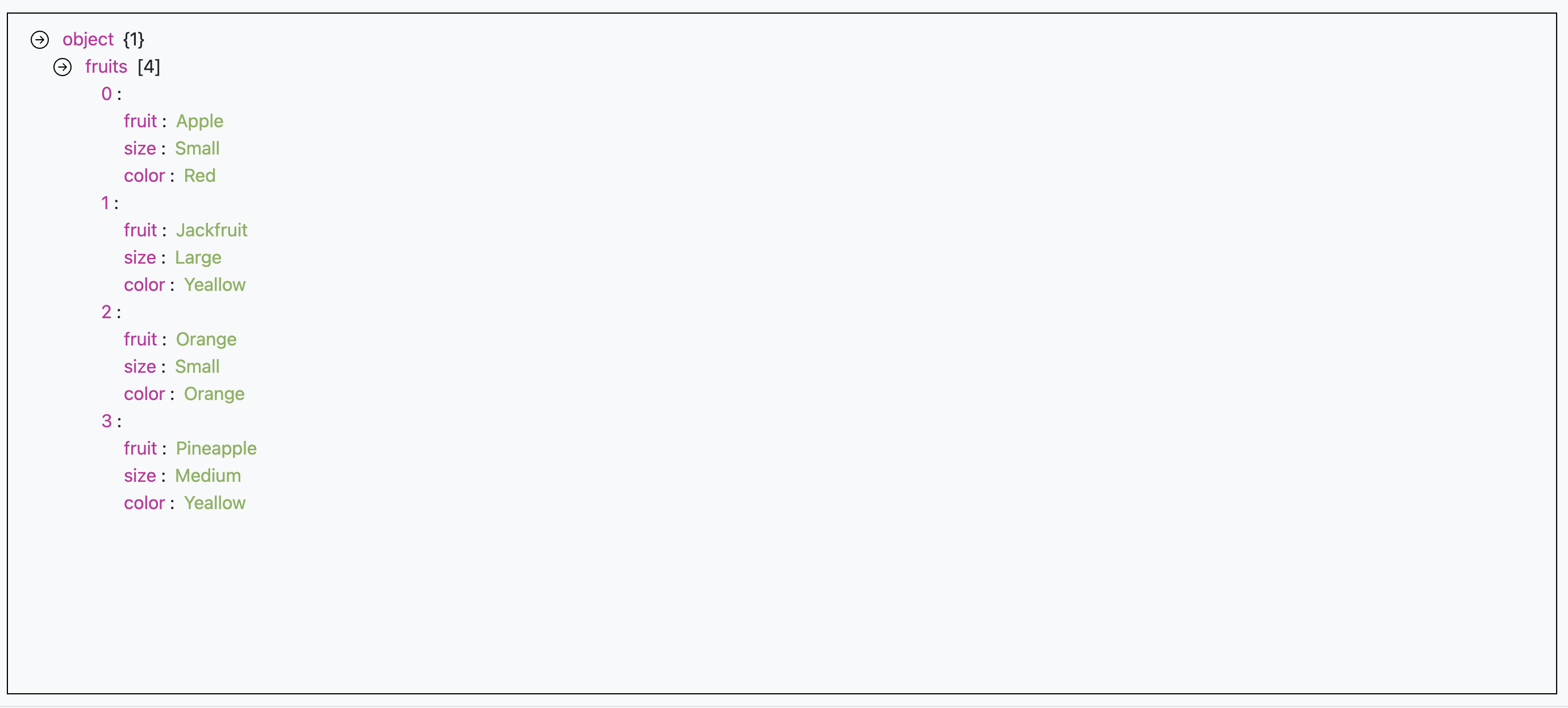
We can see a tree view of the JSON Document in read only mode and expand collapse nodes.

How to see TreeView

  • Go to Tree View
  • Paste or upload the JSON document in right editor
  • Click on the TreeView Button
  • Tree will be generated if the JSON is valid

Following image shows one sample differences generated.

Formatting & Minifying JSON

Make your JSON documents readable with the Formatter or compact them for production use with the Minifier.

How to use

  • Paste your JSON into the editor.
  • Click Format/Beautify to add indentation and line breaks.
  • Click Minify to remove all unnecessary whitespace and reduce file size.

JSON and YAML Conversion

Easily switch between JSON and YAML formats, which is particularly useful for configuration files like Kubernetes manifests or OpenAPI specs.

How to Convert

  • Select the JSON to YAML or YAML to JSON tool.
  • Input your data into the source editor.
  • Click Convert to see the result in the opposite format instantly.

JSON to CSV Conversion

Convert flat or nested JSON arrays into CSV format for use in spreadsheets like Excel or Google Sheets.

How to Convert

  • Paste your JSON array into the JSON editor.
  • Click Convert to CSV.
  • Use the Download button to save the result as a .csv file.

JWT Decoding

Inspect JSON Web Tokens (JWT) safely. This tool decodes the token locally in your browser; your sensitive data is never sent to our servers.

How to Decode

  • Paste your encoded JWT into the input field.
  • The tool will automatically parse the token.
  • Review the Header (algorithm & type), Payload (claims), and Signature in the decoded sections below.